I want to tell you a story about a morning I’ll never forget.
It was late November, around three in the morning, on a lake in northern Alabama. I’d been fishing that cove for two hours without a single bite — just me and my buddy Mike, standing at opposite ends of a small aluminum boat, each holding our rods out over dark water while nothing happened beneath us. We were cold, tired, and thinking about heading home when my line went slack. Not the sharp jerk of a fish taking your bait — the gentle drift of something barely touching it, almost too light to feel through your fingertips if you weren’t paying attention.
But I wasn’t paying attention with my eyes. I was paying attention with my hands. My left hand held the rod just above the reel, my right hand supported the cork grip. I felt that light touch through the rod itself — a vibration so subtle it was more like a whisper than a strike. I reeled slowly, carefully, letting the tension build until my rod bent into a perfect C-shape. A largemouth bass. Maybe four pounds. Struck right there in the darkness with no visual indication whatsoever.
Mike looked over, saw my rod curved, and immediately understood what just happened. “You felt it?” he asked.
“Yeah,” I said. “Didn’t even see it.”
That’s because you don’t need to see fish to catch them. You only need to feel them.
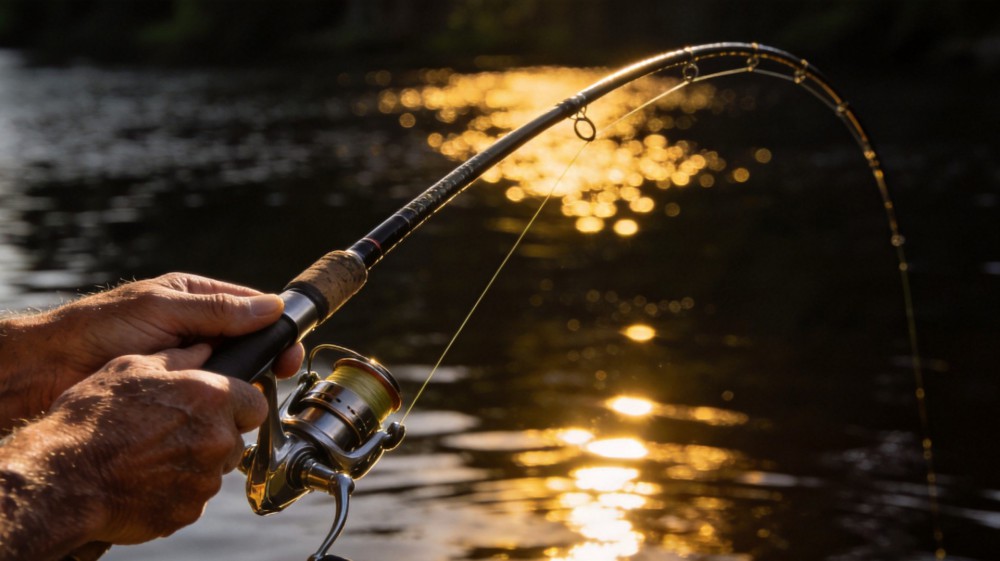
This feeling — this ability to sense vibrations traveling up your fishing line into your hands and interpret them as fish activity — is called line feel. It’s the single most important technical skill in freshwater bass fishing. Far more important than knot tying (which you’ll master in a week), far more important than lure selection (which you’ll learn through repetition over months), and infinitely more valuable than any expensive piece of gear you can buy.
Line feel separates anglers who catch consistently from anglers who catch occasionally. It turns blind casts into calculated presentations. It transforms frustration into opportunity. And best of all — it’s completely within your reach to develop right now, today, on any body of water nearby.
But here’s the problem nobody talks about: almost no one teaches it. Fishing instructors focus on casting technique, lure choice, and gear selection. They tell you to watch your line carefully or look for surface activity. They forget something fundamental: you have ears on both hands, and they’re telling you everything you need to know if you learn how to listen.
Let me show you how.
Exercise One: The Blind Line Test
Sit down tonight. No lake needed. No gear required beyond a single spool of four-pound monofilament line cut to roughly twelve feet long.
Hold one end of the line between your thumb and forefinger of your left hand. Stretch it taut horizontally across your lap at arm’s length. With your right hand, gently pull the line sideways — not hard, just enough to create a slight vibration that travels back up the line to your left hand. Can you feel it?
Good. That faint tremor? That’s exactly what a fish bumping a soft plastic lure feels like when she’s hovering in ten feet of water below you. That exact same frequency. Same amplitude. Different context. Your left hand doesn’t care whether the vibration came from fish or fingers — it only responds to the mechanical energy transmitted along the line.
Now practice this daily:
Hold the line taut with your left hand
Pull gently to one side with your right hand
Close your eyes
Focus entirely on what your left palm and fingertips feel
Note the difference between light pulls (fish nibbling), medium pulls (fish holding), and heavy continuous tension (hooked fish fighting)
Repeat for five minutes every night before bed
By day three you’ll start distinguishing three distinct vibration patterns. By day seven you’ll be able to identify which direction and intensity the vibration originated from based solely on how it arrives at your hand. By day twenty, your sensitivity will be so refined that you can detect a fish biting your lure at thirty feet depth before it ever reaches your conscious thought process.
I practice this exercise myself — every single night before going to sleep. Not because I expect to catch bass in my bedroom, but because keeping my line feel sharp is as important to me as keeping my casting accuracy sharp. One feeds the other. Both require repetition.

Exercise Two: Surface Observation Training
On your next trip to any lake, river, or pond — bring nothing but yourself and a pencil if you want to take notes. Your goal isn’t to catch fish this time. Your goal is to sit on a dock or bank and observe the water’s surface for thirty uninterrupted minutes, watching for subtle movements that indicate fish activity below.
Here’s what to look for:
Ripples that don’t match wind or current. When wind blows evenly across a lake surface, ripples follow a predictable pattern. But if you spot irregular ripples moving against the prevailing wind direction — that’s usually fish surfacing to feed or adjust position underwater. Track these anomalies and note where they appear relative to visible structure like weed beds, rocks, or docks.
Shadows under the surface. On clear-water days you can often see fish swimming just below the surface as dark moving shapes. Watch their behavior closely. Are they cruising slowly along a weed edge? Hovering motionless? Actively pursuing smaller fish? Each behavior pattern tells you something specific about current feeding status and how aggressively they’ll likely respond to artificial lures.
Surface disturbances near cover. Fish hiding behind vegetation or structure frequently break surface tension when flushing baitfish or when themselves being flushed upward. Look for sudden splashes, ring patterns, or displaced algae clusters near structural edges. These are active zones worth targeting immediately once you’ve moved to that area.
Spend those thirty minutes training your eyes. Then switch to training your hands:
Walk to the water’s edge where you noticed ripple activity. Cast your simplest lure — green pumpkin worm on an offset hook — directly toward the disturbance. Retrieve slowly, deliberately, letting your fingers monitor vibrations on the line the entire time. Even if you don’t catch anything, you’re building neural pathways between what your eyes saw and what your hands felt.
After six to eight sessions of this kind of paired observation-and-retrieval work, something remarkable happens. You start sensing fish activity before you even see it. Your hands pick up minute line vibrations weeks before your eyes would recognize surface indicators.
Exercise Three: Progressive Weight Retrieval
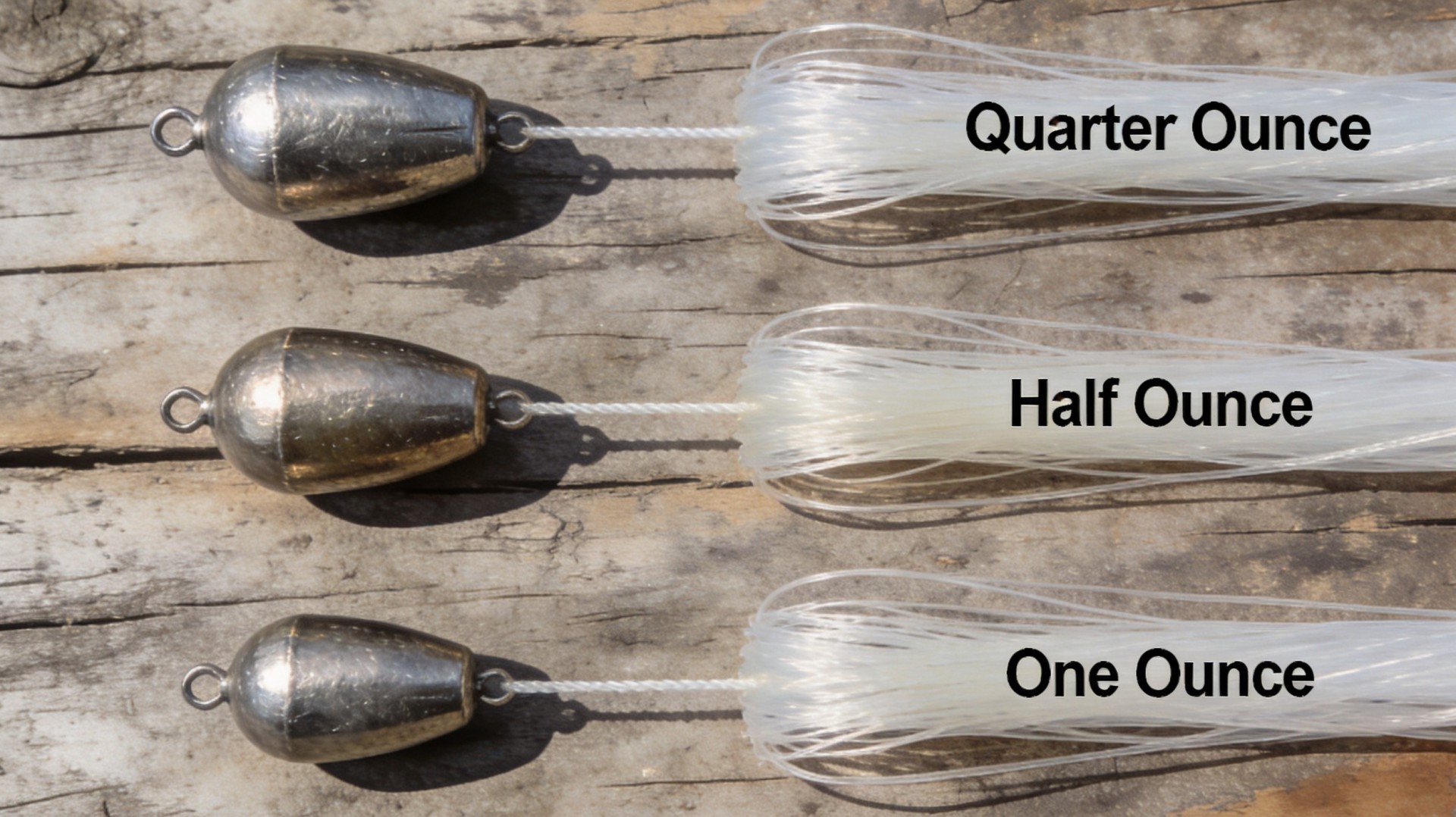
This exercise requires minimal equipment — a single spinning rod rated for eight to twelve-pound test line, a basic reel, and three sinkers weighing one-quarter ounce, half-ounce, and one ounce respectively.
Each session, cast each weight into open water and retrieve it at three different speeds: very slow (approximately one foot per second), moderate (two feet per second), and fast (three to four feet per second). For each speed-weight combination, pay careful attention to how the resistance feels in your hands during retrieval.
Record observations after each cast using this simple format:
Weight + Speed: Quarter-ounce, slow retrieve
Feel: Light resistance, occasional snagging sensation when retrieving past submerged structure
Comparison: Noticeably lighter than half-ounce at same speed; similar tactile response to one-ounce at faster speed
Repeat this exercise across different water conditions over three weeks. Clear versus stained water changes resistance characteristics significantly. Warm water versus cold water affects drag coefficients subtly but measurably. Shallow areas versus deep areas alter the amount of direct feedback transmitted through the line.
The cumulative effect of this systematic practice is profound. After three weeks you’ll instinctively distinguish between snag resistance, structure contact, weed wrap, and actual fish strikes — all purely through differences in pressure profiles transmitted along your line. Most anglers never reach this level of tactile discrimination until years of accumulated real-world experience forces it upon them. You can compress those years into weeks of dedicated deliberate practice.
How to Apply Line Feel in Real Fishing Situations
All this theoretical practice means nothing unless you translate it directly into actionable decisions during actual fishing sessions. Here’s exactly how I use heightened line sensitivity on the water, moment by moment:
Detecting Subtle Strikes
In clear water with low-pressure bass, strikes often register as extremely gentle taps — barely stronger than your lure brushing against a rock. Without trained line feel, you dismiss these as debris contact and keep retrieving. With trained line feel, you recognize the unique vibration signature of a fish mouth contacting a lure and you set immediately.
The difference is massive. A missed subtle strike costs you zero opportunity — the fish simply swims away unharmed. A delayed reaction to a subtle strike costs you a hooked fish. In a tournament setting, that single missed opportunity could cost you three or four additional pounds of total weight across multiple sessions.
Identifying Bottom Composition
Before you even hook a fish, knowing what’s under your lure improves presentation quality dramatically. Hard bottom feels solid and transmits vibrations clearly through your line — rocks, gravel, bare sand. Soft bottom feels muffled and absorbs energy quickly — mud, decaying vegetation.
Hard-bottom retrieves give you crisp feedback about structure contours. Soft-bottom retrieves dampen feedback but offer higher probability of productive food sources concentrated in muddy substrates. Adjust your retrieve speed accordingly: faster on hard bottoms where you can afford more precise positioning, slower on soft bottoms where you need extended contact time with the substrate.
Recognizing Lure Malfunctions
When your spinner blade stops spinning or your propeller rig loses rotation, the change in retrieval resistance is instantly noticeable through trained fingers. Most anglers don’t realize their lure has mechanically failed until the fish stop biting, by which point they’ve wasted ten or fifteen minutes casting a broken bait. Recognizing and replacing a malfunctioning lure takes seconds if you’re paying attention to resistance changes.
Reading Currents and Flow Patterns
River anglers especially benefit from enhanced line sensitivity because water movement constantly modifies line tension independent of fish activity. In fast-moving currents, trained fingers allow you to differentiate between current-induced vibration noise and legitimate underwater strikes. In slow-moving streams, subtle fish bites that normally would go unnoticed become extremely apparent.
The Daily Commitment Required
Developing genuine line sensitivity isn’t complicated. It’s consistent.
Here’s what I recommend for someone starting from absolute scratch:
Week 1–2: Five minutes of the Blind Line Test each night. Simple. Repetitive. Builds baseline sensitivity.
Week 3–4: Ten minutes of Surface Observation plus one thirty-minute live-water retrieval session per week where you ignore catches entirely and focus exclusively on reading line vibrations.
Month 2 onward: Incorporate Progressive Weight Retrieval training twice weekly alongside regular fishing sessions. Maintain nightly Blind Line Test practice whenever possible.
Total daily commitment: ten to fifteen minutes. No more than what you’d spend scrolling through social media. But applied consistently over two months, these exercises fundamentally recalibrate your nervous system’s ability to detect and interpret underwater signals transmitted through your fishing line.
One Last Thing
There’s a particular kind of peace that comes from sitting alone on a lake at dawn, rod resting in your hand, line stretching down into dark water, listening to whatever your hands tell you about life happening beneath the surface that you cannot see.
When you develop true line feel, fishing stops being mostly about watching. It becomes mostly about feeling. About connection. About communicating with creatures living completely outside your visual range, understanding their intentions through pressure variations traveling through nylon thread thinner than a human hair.
That connection — that intimate awareness of something larger and wilder than yourself operating just inches below your fingertips — is why people keep coming back to the water regardless of how many fish they actually bring home.
Learn to listen. Your hands already know what to say.
If you found this helpful, share it with someone who stares at their line instead of feeling it. Or if you’re that person — try tonight’s five-minute exercise. Come back to this page tomorrow and see if anything changed.