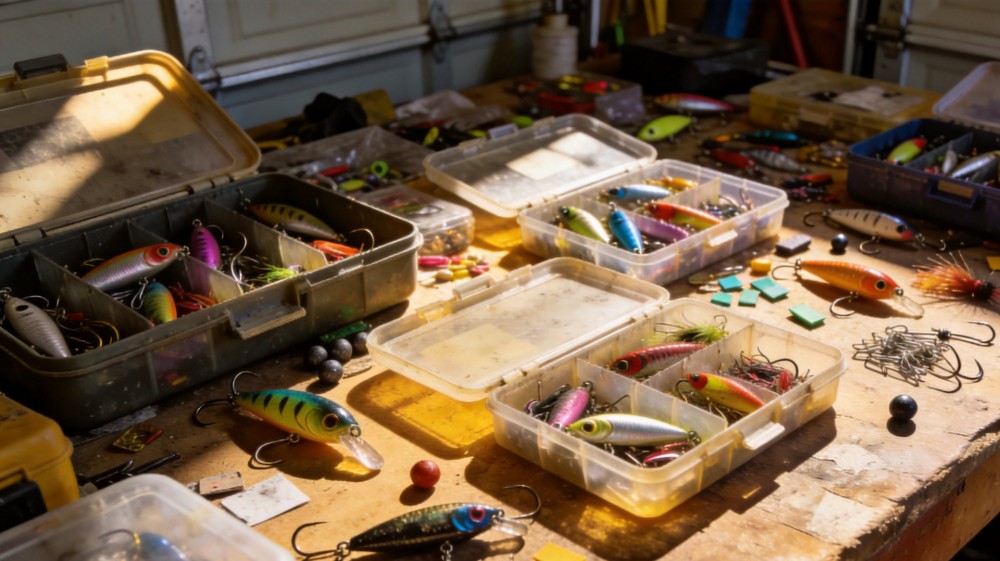
My father handed me a Zebco fishing rod that was at least thirty years old. The reel still had the original line wound around its spool, brittle and yellowed with age. My tackle box contained perhaps two dozen lures, each one brighter than the last, and every single one of them useless for anything within fifty miles of my house in Texas.
I must have been ten years old.
"Cast straight out," he said. "Not up."
That was his entire tutorial. Cast straight out. Not up.
I threw it as hard as I could toward the lake. The lure arced through the air, landed on the water, and three seconds later my line went tight. A bass. Maybe a pound and a half, but at ten years old that fish weighed more than I did. My father laughed when I reeled it in sideways because I couldn't figure out how the reel actually worked. He was right to laugh.
I was hooked. Literally.
And that's exactly why you're probably struggling to catch anything right now.

Let me explain.
When I caught that first bass, I didn't know how to tie a knot. I didn't know what "pound test" meant. I didn't know that certain lures work for certain seasons, or that fish hold structure rather than open water. I knew one thing: cast straight out, wait, pull, fish on the line.
That simplicity worked because the fish in that lake weren't pressured. They'd never seen a lipless crankbait before. They bit because something floated near them that looked like food. That's it. No technique, no strategy, no gear advantage. Just a kid doing exactly what he was told.
Then I came back the next day. And the day after. And the fish stopped biting.
Because I'd learned nothing from my first trip. I expected the next trip to feel the same. But fishing doesn't work like that. The more you catch on day one, the harder days two and three become — not because the fish are stupid, but because you need to stop relying on luck.
I spent the better part of a summer feeling like I was terrible at this sport. I'd thrown exactly the same lure into exactly the same spot with exactly the same technique, and somehow yesterday it worked and today it didn't. I thought I was bad at fishing.
I wasn't bad at fishing. I was just done being lucky.
There's a difference.
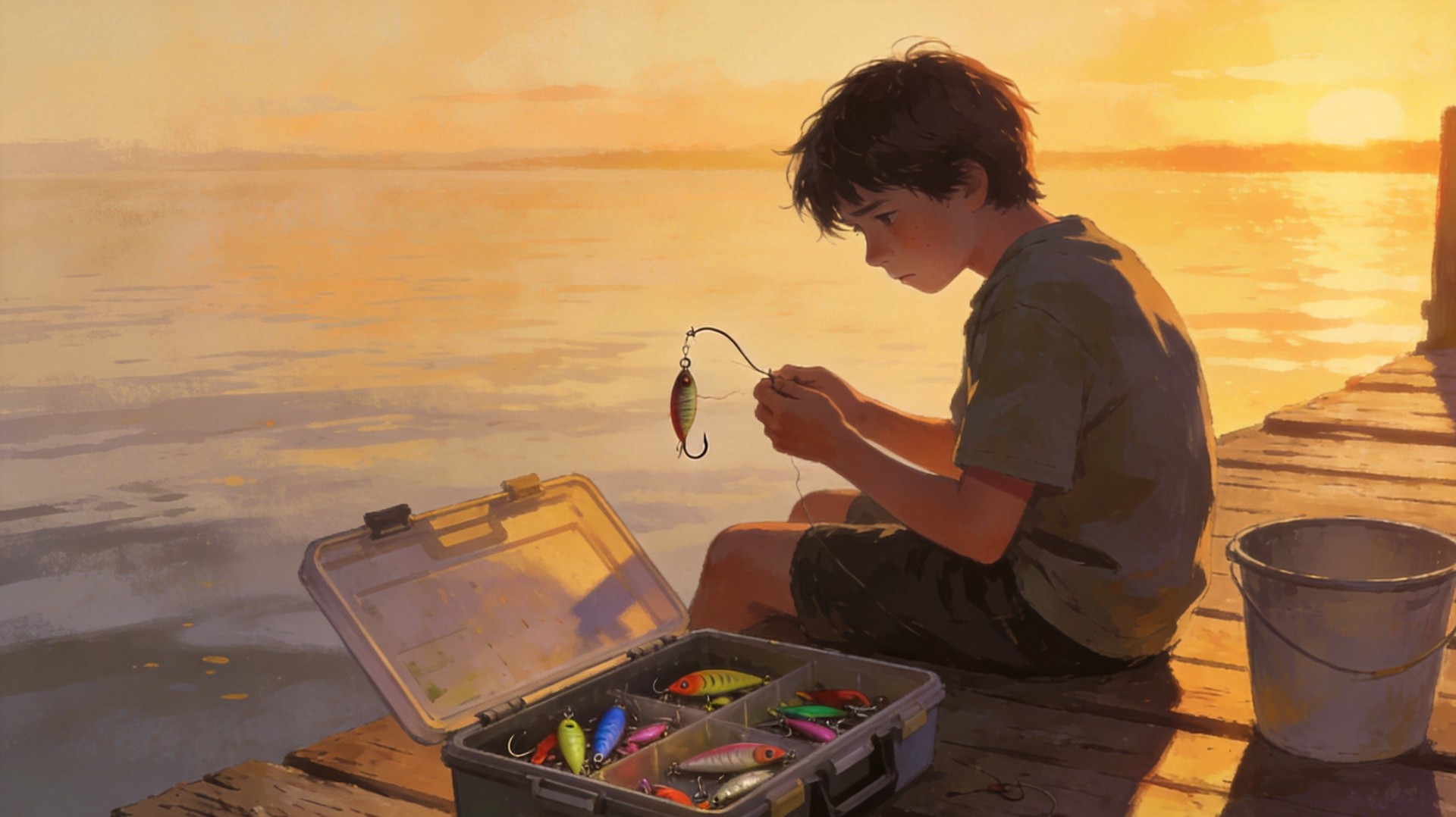
So if you're reading this as someone who just started fishing recently — or anyone planning to take their kid or grandkid out for the first time — here's what I want you to understand: the worst thing that can happen to a beginner on their first trip is catching zero fish.
Hear me out.
If your first trip produces an empty stringer, you learn two things immediately: (1) you need to know more about this, and (2) you've got room to improve. Both of those are good starting positions. They create hunger, curiosity, and humility — the three qualities that make a good angler far more than any expensive rod ever will.
But if your first trip yields twenty-five fish in two hours? You'll spend the next six months chasing that exact high. You'll throw the same lure into the same spot every weekend, and when it stops working — which it absolutely will — you'll have no idea what to do next. Because you never developed the skills to figure it out. You just got lucky once.
I'm not saying luck doesn't matter. Luck matters. Every angler alive has mornings where they wake up, walk onto the water, and instantly feel lucky. Those mornings are rare and beautiful. But you can't build a life on them. What you can build on is the knowledge that makes the other 29 mornings of the month somewhat productive instead of completely frustrating.
Here's what I want you to start with.
Keep It Simple. Stupid.
Your first fishing setup does not need to be fancy. In fact, fancy is actively harmful at this stage because it introduces variables you don't understand yet.
If I were starting over today, this is exactly what I'd bring to the water:
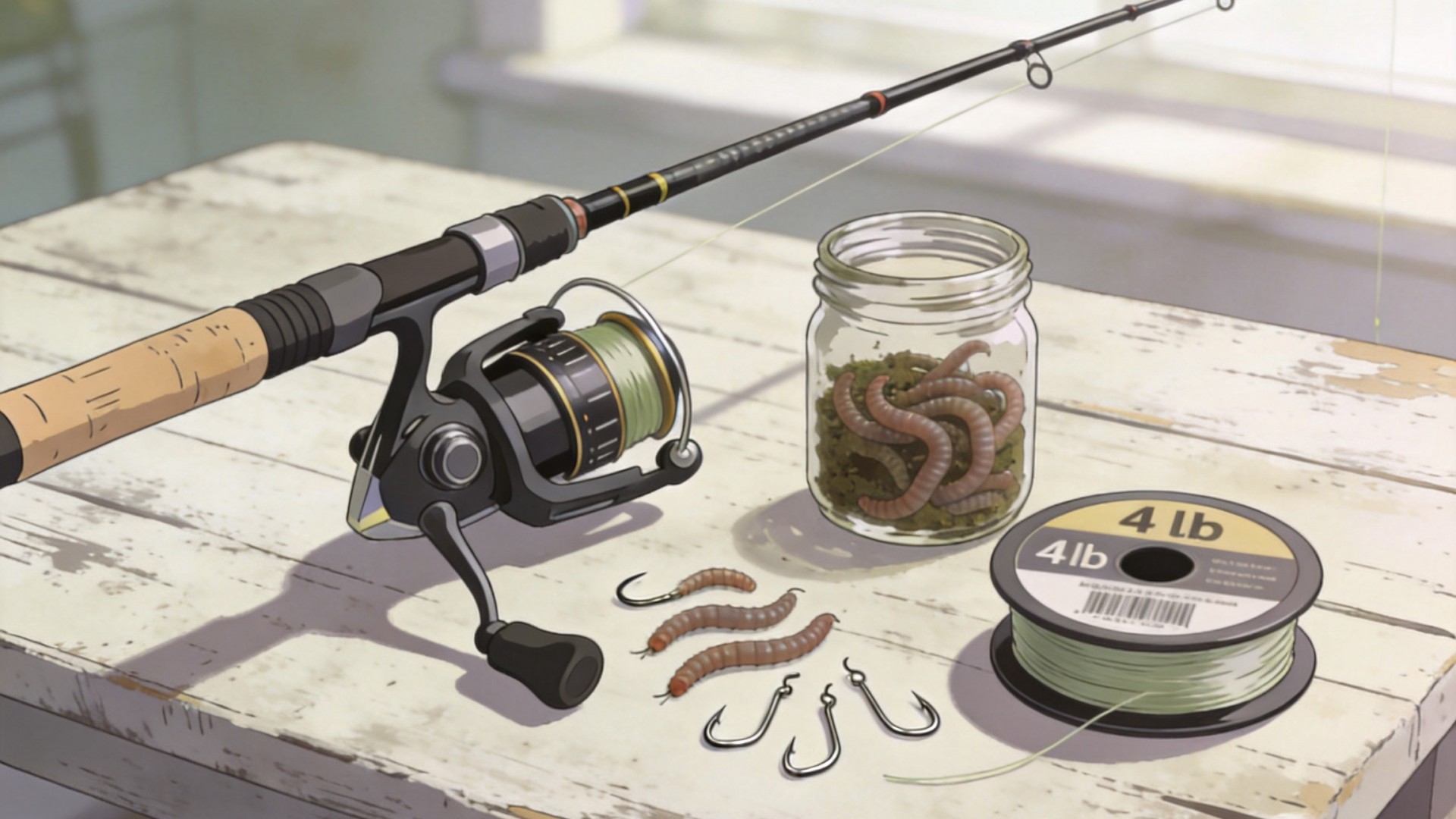
A mid-range spinning rod — nothing above $40. Your local sporting goods store has a section filled with these. Pick the one that feels comfortable in your hand for at least thirty seconds without fatigue. That's how you evaluate it. Don't think about brand names. Think about whether your wrist hurts after holding it for a while.
A basic spinning reel — the one bundled with that rod is fine. The Zebco I used had the same "push-button cast" mechanism that comes pre-packaged with half the starter kits on shelves today. Nothing wrong with it for beginners. It teaches you to cast without tangling the line into one solid ball of frustration.
A single type of live bait — worms, minnows, crickets, leeches. Whatever is legal and available where you're fishing. Live bait removes all guesswork about presentation. A living creature on the bottom of the lake looks exactly like something the fish would actually eat. Artificial lures are wonderful tools, but they require skill you haven't built yet. Feed yourself the basics first.
One hook size — #4 offset worm hook or a simple J-hook. These work with almost everything. You can put a worm on it, a minhook on it, a cricket on it. Learn one hook well enough to tie a clean knot with it in under ten seconds.
Four to eight pounds of monofilament line — this is forgiving, flexible, and affordable. It breaks easier than you'd like, which means you won't lose heavy hooks on structure the way you would with stronger line. Those lost hooks? They taught me how much I didn't know about dragging fish through underwater timber.
That's it. Five things. Less than $60 total if you're smart about it.
Why "Cast Straight Out, Not Up" Actually Matters
You might be wondering: what does "cast straight out, not up" even mean? It sounds like nonsense. It isn't.
When you cast your rod upward — meaning you swing it high above your head before releasing — the lure travels farther but drops more vertically. It also tends to splash down loudly, which spooks fish in shallow water. And most importantly, you lose control over where it lands.
When you cast "straight out" — keeping the rod relatively level, using a side-arm or low overhead motion — the lure lands softer, stays in your intended line of travel longer, and presents itself gently to fish below. Soft presentations always win. A lure dropped three feet above the fish looks like foreign debris. A lure lowered slowly onto the water's surface looks like an insect landing, and that triggers instinctual strikes even from non-aggressive fish.
This isn't advanced technique. This is Day One advice. And my father gave it to me in four words.
I wish he'd explained it the way I'm trying to explain it here, but he didn't need to. At ten years old, a direct instruction was enough because the context already made sense to me: we were sitting on a dock at sunrise, a lake stretched in front of us full of fish that wanted to eat, and I just needed to release the lure correctly so those fish could find it.
What to Expect On Your First Few Trips
Your expectations matter more than you think. If you believe your first day should produce ten fish, you'll feel like a failure with two. If you believe your first day is about learning and maybe catching something, you'll enjoy the process regardless of the count.
Here's what actually happens:
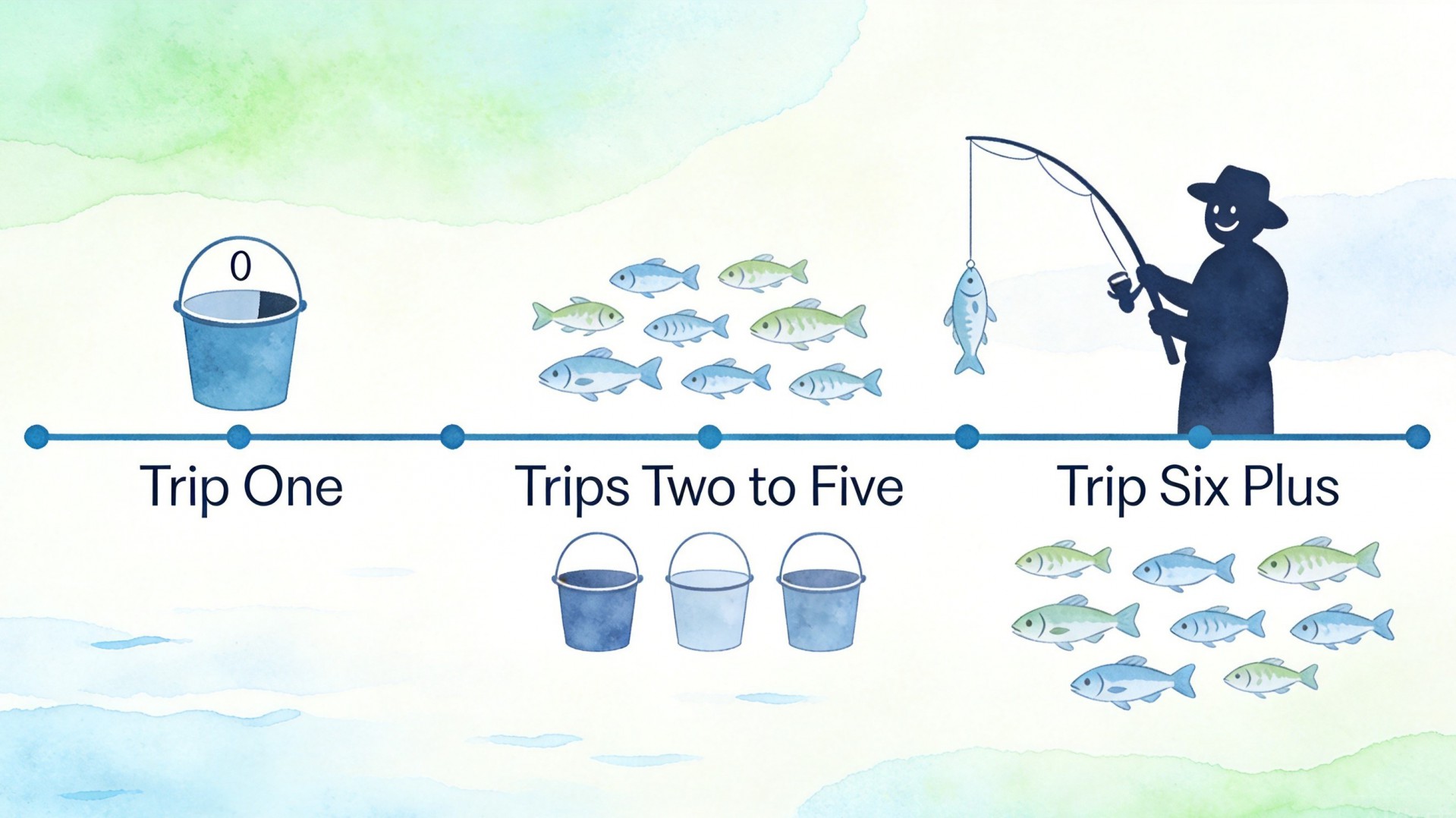
Trip one: Zero to three fish. You're figuring out how to bait the hook without crying when it gets bitten. Your knots might slip. That's normal. You'll swear you'll never leave the house again. You will return the next week.
Trip two to five: Three to ten fish, unevenly distributed. Some days you'll catch like crazy because you happened upon the right depth or structure or weather window. Other days you'll sit in the same spot and watch ripples where you suspect fish are feeding. Both are teaching you something. The good days show you what works. The bad days show you what almost works.
Trip six onward: This is where it starts to gel. You begin noticing patterns — like how the fish hit harder in early morning than late afternoon. Like how cloudy days produce more bites than sunny ones in winter. Like how a slower retrieve works better than a frantic one. These observations stack up. By trip twelve, you're not relying on luck anymore. You're relying on a growing collection of data points that no one handed you — you earned them by going back, again and again.
One More Thing
This isn't about fish. I keep circling back to it because that's what it always comes down to. My father wasn't teaching me how to catch bass that morning. He was teaching me how to stand next to a lake at dawn, hand steady, mind quiet, and pay attention to something bigger than myself.
The catching was incidental.
Everything else — the patience, the problem-solving, the willingness to fail repeatedly and come back anyway — those are the things that shaped who I became. Not just as a fisherman, though that matters deeply to me. As a person. As someone who learned early that the world rewards attention more than effort, and that the things worth knowing rarely come packaged with instructions.
If you're taking your own kid or friend or neighbor fishing for the first time, tell them to cast straight out. Not up.
And don't worry about how many fish they bring home.
Worry about whether they enjoyed the morning enough to ask when they can go back.
If you found this useful, share it with someone who needs to learn how to fish. Or if you're the one who needs to learn — bookmark this page and come back after every trip. By trip twenty, you won't need the advice anymore. You'll have already lived it.