Here’s how to choose a beginner kit that actually helps you catch fish — and what to do if you’ve already made the wrong purchase.
The Honest Truth About “Piece Counts”
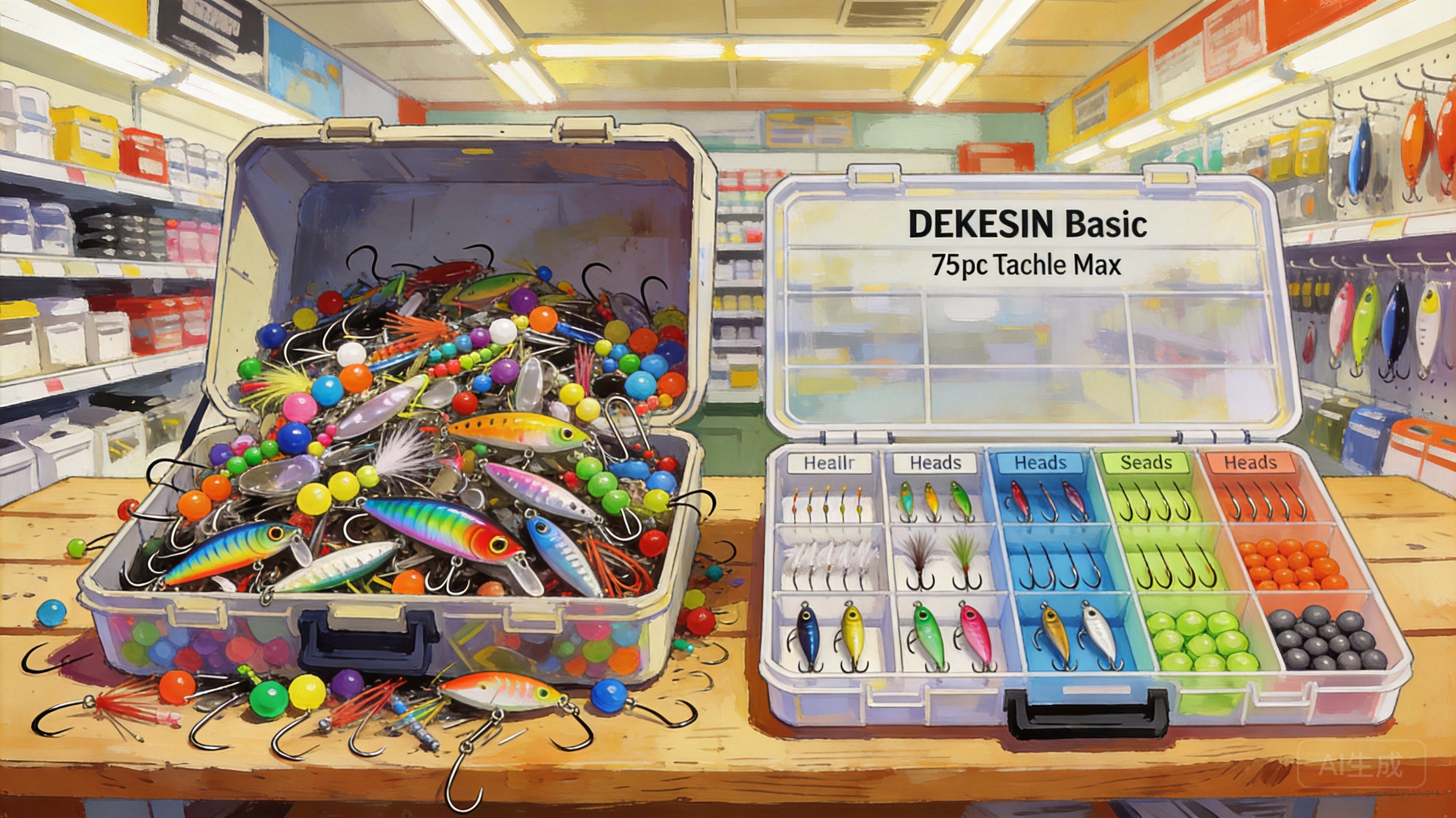
When a tackle box claims 200 pieces, 150 pieces, or even 75 pieces, that number is almost meaningless — unless you know what’s actually inside.
Most cheap kits inflate their piece counts with three categories of unnecessary filler:
Duplicate hooks — Ten identical size #6 offset worm hooks that serve the exact same purpose. You need three. Not ten.
Colorful plastic beads and weights — Things that look impressive through the plastic window but have no practical application for bass fishing in freshwater.
Lures for fish that don’t exist where you fish — Saltwater plugs, striped bass patterns, catfish rigging — all crammed into a box that claims to be the “complete bass fishing kit.”
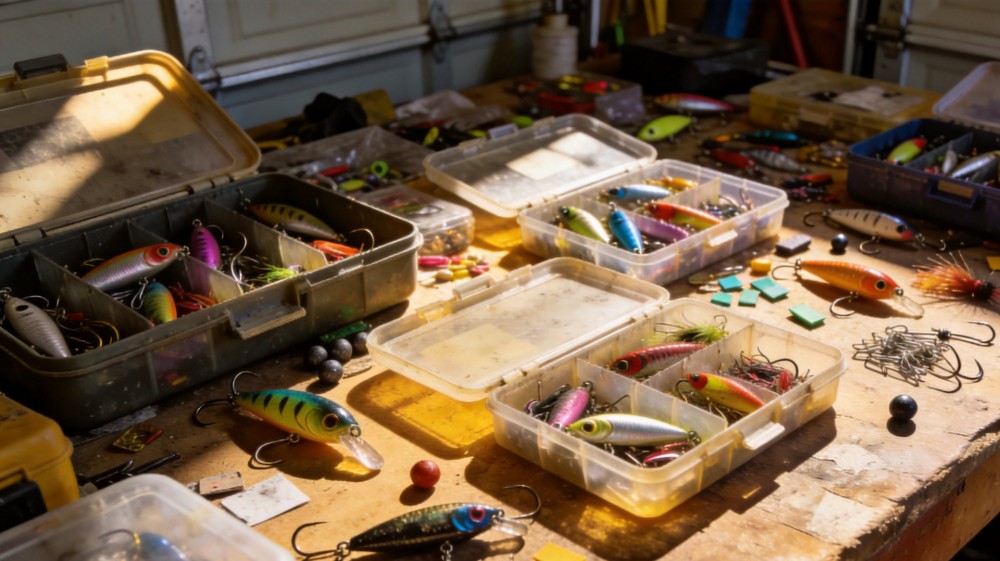
The result? A box that looks like a bargain on the shelf but contains mostly junk. One fishing blogger once emptied five different beginner kits onto his garage floor and counted approximately one thousand individual pieces. Fewer than forty were things he’d actually use on a real fishing trip targeting bass, crappie, or bluegill.
Forty out of one thousand. Four percent.
The industry sells you the illusion of value — a big number on a box — not actual utility.
What Actually Matters in a Beginner Kit
Here’s a framework for evaluating any tackle kit. It’s simple, practical, and applies whether you’re buying a $20 starter box or a $200 premium kit.
Rule One: Every Piece Must Pass the “Would I Use This in One Season?” Test
Go through your kit. Pick up each individual lure, each hook, each sinker. Ask yourself: would I genuinely use this on a fishing trip within the next twelve months? If the answer is “maybe someday” or “I guess so,” it doesn’t belong in your box.
Beginners tend to keep things “just in case.” That’s how tackle boxes fill up with ghosts — lures you bought because they looked cool, not because you knew what they were for.
Rule Two: Know Your Target Fish First
This is the single most important question, and the one almost every beginner skips: what fish are you trying to catch?
If you’re targeting bass (and most beginners in North America are), you need soft plastic worms, Creature Baits, Senkos, jerkbaits, and a few crankbaits. That’s the core.
If you’re targeting panfish (bluegill, crappie), you need small jigs, live bait hooks, and slip bobbers.
If you’re targeting catfish, you need catfish pellets, cut bait rigs, and heavy line.
Each target species has a completely different gear profile. Buying a bass kit when you want panfish gear is like buying a snowboard when you wanted skis — same sport, totally wrong tool.
Rule Three: Line, Hooks, and Sinkers Should Be One Size Up from “Basic”
Beginner kits often come with four-pound test line, size #8 hooks, and quarter-ounce sinkers. These are fine for panfish. They’re inadequate for bass.
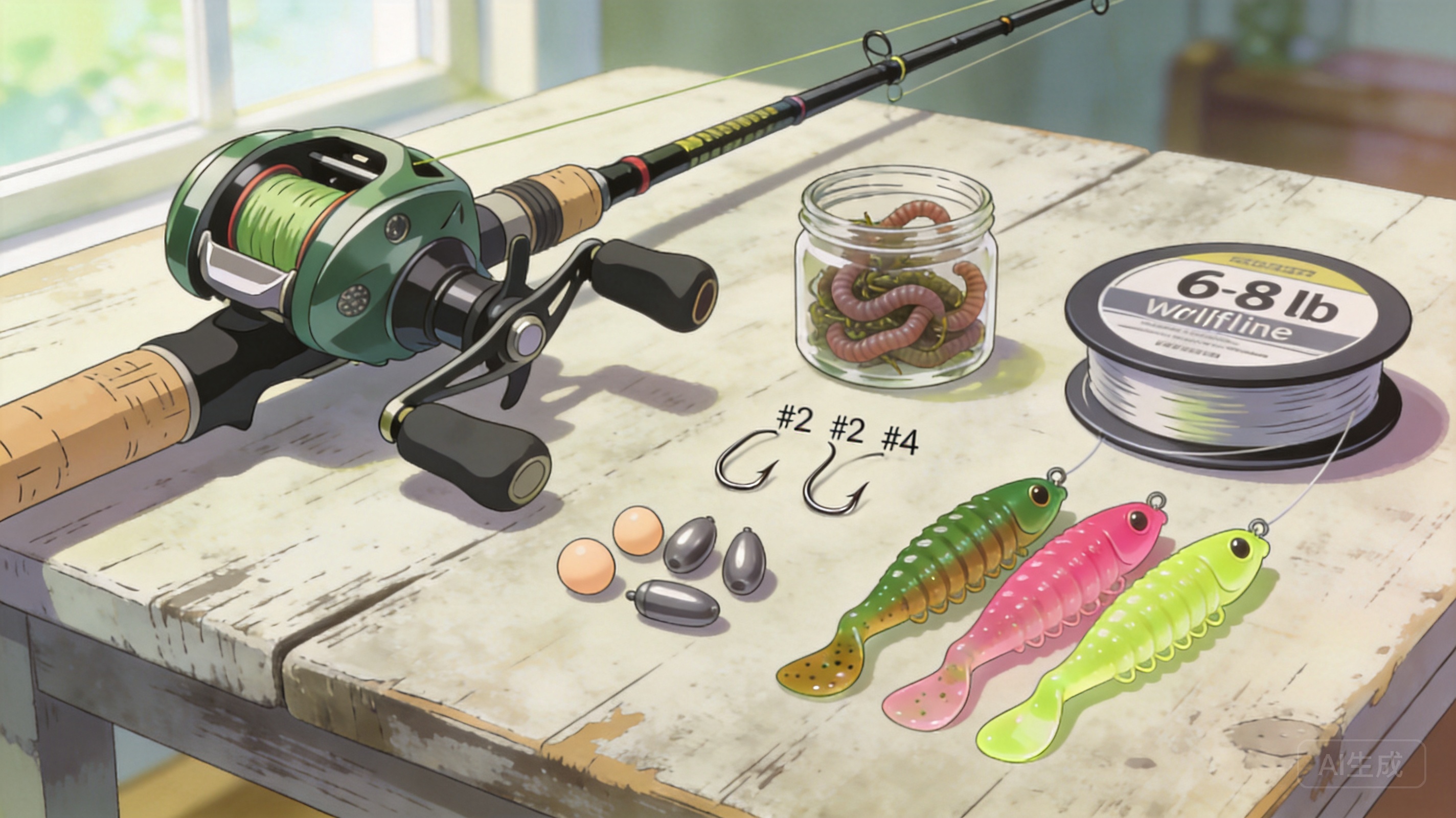
Bass have paper-thin lips that tear out easily on light line. Four-pound test snaps on the first fight. Six to eight-pound test monofilament is the sweet spot for bass. It’s strong enough to land a five-pounder, forgiving enough that you won’t lose hooks on every submerged branch, and affordable enough that you can replace it frequently without thinking twice.
Hooks should be size #2 to #4 offset worm hooks for soft plastic worms — the workhorse rig in bass fishing. Jig hooks in size #4 to #6 for shaky-head and weedless presentations. That’s two hook sizes. Not twelve.
Sinkers: egg sinkers in 1/8 oz and 3/16 oz, plus a few bullet weights for Texas rigs. That covers ninety percent of bass fishing scenarios.
Rule Four: Lures Should Come in Three Color Families, Not Twenty
I see beginner kits with forty-eight different colored lures. Forty-eight. Most of them are variations on the same formula — same shape, slightly different hue. Green pumpkin, watermelon, watermelon red, watermelon seed, June bug, chartreuse, white, black — and on and on.
Here’s what you actually need:
Natural colors (green pumpkin, watermelon, brown) — for clear water and pressured fish
Dark colors (black/blue, junebug, black/purple) — for stained water, overcast days, and low-light conditions
Bright colors (chartreuse, white, orange) — for murky water, windy days, and high-visibility situations
Three color families. That’s it. Any more than that and you’re just adding confusion, not capability.
Rule Five: A Kit Should Solve Problems, Not Create Them
The worst thing about a bad tackle box isn’t that it doesn’t help you catch fish. It’s that it actively teaches you bad habits.
A kit with fifty different lure types teaches you to throw everything and see what works — which is exactly the problem described in “Why Switching Lures Is the #1 Reason Beginners Can’t Catch Fish.” You need restraint, not options.
A kit with ten different line weights teaches you to overthink every cast. Pick one pound test and learn it. Master it. Then consider upgrading.
A kit with hooks in twelve different sizes teaches you that complexity equals capability. It doesn’t. It equals decision paralysis.
What Good Design Looks Like
When a kit is designed well, every piece has a job. There are no duplicates. No filler. No plastic beads counting toward the piece total.
Take something like the DEKESIN Basic 75pc Kit as an example of this approach — every lure chosen for a specific bass fishing scenario, three clear color families, bass-appropriate line and hook sizes, and a tackle box with real organizational dividers instead of one big empty compartment. Seventy-five pieces, each one earning its place.
That’s the standard to aim for, whether you’re buying a pre-made kit or building your own.
The Five-Minute Kit Audit
Before you buy any tackle box — cheap or expensive — do this audit. It takes five minutes and will save you hundreds of dollars over the next five years.
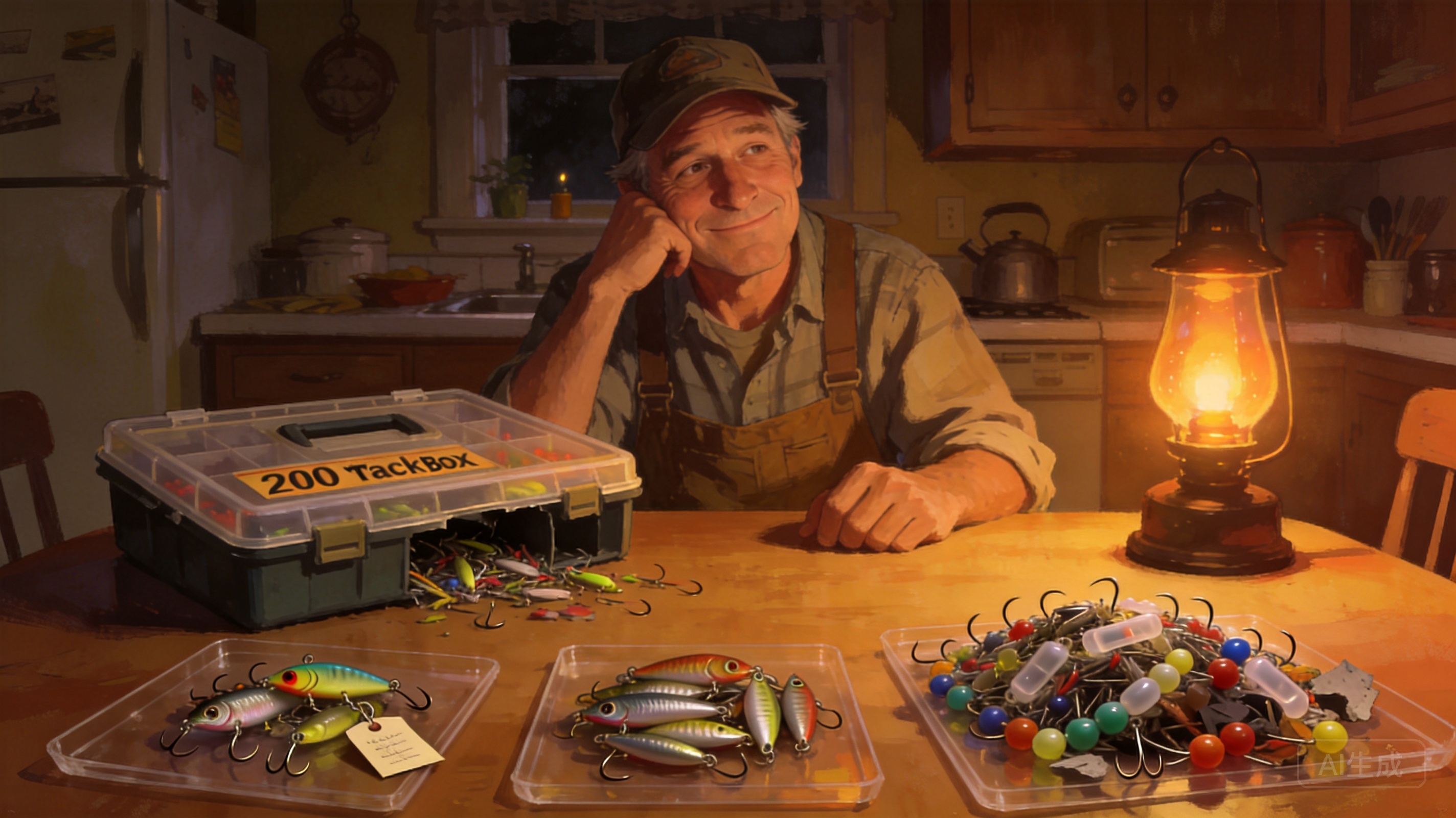
Empty the box. Lay every piece on a table.
Sort into three piles: “Will use this weekend,” “Might use someday,” “What is this?”
Count the “Will use this weekend” pile. If it’s fewer than thirty pieces, the box is mostly filler.
Count the “What is this?” pile. These are the junk pieces that drain your confidence and clutter your mind. Every unfamiliar lure is a decision you don’t need to make.
Compare to your target fish. Does this kit match what you’re actually trying to catch? Or did you buy a bass kit when you wanted to fish for panfish?
If you do this audit on a typical big-box beginner kit, here’s what you’ll likely find:
Average “Will use this weekend”: 18 pieces
Average “Might use someday”: 34 pieces
Average “What is this?”: 49 pieces
The rest is decoration.
What to Do With the Junk
If you’ve already bought a kit that fails the audit, don’t feel bad. The industry is designed to make you feel like you need more stuff. You don’t.
Here’s what to do:
Donate the sealed packages. Those unopened lure packs are someone else’s first good kit.
Recycle the plastic beads and unused sinkers. They’re plastic waste either way.
Keep the hooks and line. These are universal. You can use hooks from any kit with any lure.
Keep one or two lures that look useful and toss the rest. One good crankbait is worth more than forty mediocre ones.
Then build from there. Start with the three pieces you kept. Add one new lure at a time, each one chosen for a specific situation you’ve identified. You’ll learn more from ten well-chosen lures than from fifty random ones.
The Real Secret
The secret to choosing your first fishing kit isn’t about finding the perfect box. It’s about understanding that the kit doesn’t make the angler — the trips do.
A great kit in the hands of someone who never fishes is just expensive plastic. A mediocre kit in the hands of someone who goes out every weekend, learns from every trip, and refines their approach over months and years — that kit becomes legendary.
The brands change. The colors evolve. But the fundamental understanding — which lure works when, what fish respond to what presentation, how to read water and structure — that comes from going out, failing, learning, and going out again.
No tackle box teaches you that. No piece count gets you there.
But the right kit — one with fewer pieces, each one chosen with intention — removes the noise. It lets you focus on what matters: getting on the water, paying attention, and figuring out what works.
That’s all any of us ever needed.